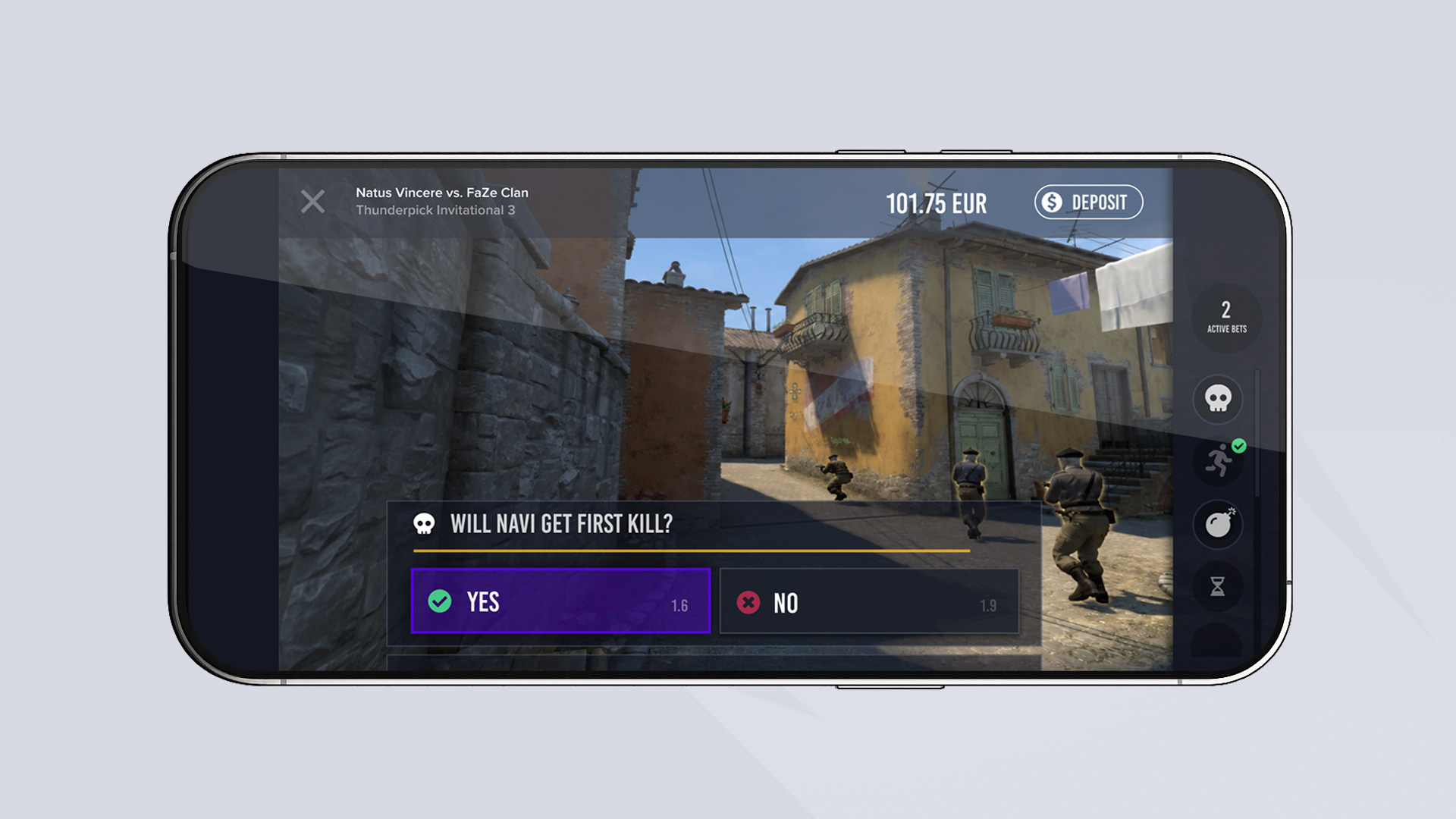
AI Micro-betting Platform
Designing for AI and ML systems
How to define the product vision for an AI ML-driven real-time micro-betting app - complete with integrated live streams.
Case study
Building a product while laying Network foundations

New Wave Poker began as a straightforward brief: design and launch a new poker product across mobile and desktop.
In reality, the business intended to build a wider poker network capable of supporting additional brands, partners and products in the future.

The original project grew to become the 'Champion Network' comprising multiple B2C brands
As Head of Design, I was responsible for defining the design vision, establishing the design strategy and creating the product itself.
From the outset, this required a particular kind of balancing act.
We needed to move quickly enough to support product delivery, while simultaneously creating enough structure to support future growth.
Looking back, that tension became one of the defining themes of the project.
One of the realities of startup product development is that future requirements are rarely fully known.
What was known, however, was that New Wave Poker was unlikely to remain a single standalone product forever.
The business envisioned a broader ecosystem of brands and partners built on shared foundations.
This raised an important question early in the project:
How do you design a product for today's needs without limiting tomorrow's opportunities?
Rather than treating scalability as something to address later, I chose to build those considerations directly into the design process from day one by establishing a foundation that could evolve alongside the business.

One of the most important decisions made during the project was introducing a structured design system and token architecture at the beginning of development.
Working closely with engineering, we established:
This provided immediate benefits for the product team.
Design decisions became easier to communicate, interfaces became more consistent and development could move faster because patterns were established early rather than repeatedly reinvented.
As new requirements emerged, visual changes could be made systematically rather than through extensive redesign and redevelopment effort.
The design system wasn't a separate initiative running alongside product development.
It became part of how the product was built.

“This project presented a design challenge from day one: How do you design a product for today's needs without limiting tomorrow's opportunities?”

A strong foundational Design System allowed the product to scale quickly while maintaining a consistent look and feel across each brand
One of the lessons reinforced throughout the project was that design systems are most valuable when they support delivery rather than compete with it.
The goal was never to create a perfect system in isolation, but to create a practical system that reflected the realities of a startup environment. Development teams needed clear decisions, the business needed visible progress, the product needed consistency. The system helped achieve all three.
By establishing foundational rules early, we were able to continue iterating rapidly while maintaining confidence that future products, brands and visual identities could be supported without rebuilding from scratch.

As the foundational design work was completed, more polished and complex UI modules were implemented incrementally
The scale of the project also introduced another challenge - building a new poker platform required a significant volume of supporting assets, including promotional creative, player-facing artwork and in-game visual content.
As a small team, producing this volume of content through traditional methods would have required additional resources and significantly longer production timelines.
To address this, we began incorporating generative AI tools into the design workflow.
These tools were used to support the creation of:
Looking back, this was an early example of something that has since become commonplace across product teams.
The value wasn't simply generating assets faster - it was expanding what a small team could realistically deliver without compromising momentum elsewhere in the product.
Used selectively, these tools became another mechanism for increasing output and maintaining focus on the higher-value design challenges within the project.

The initial objective was to deliver a poker experience capable of competing with established products in the market.
Once that foundation was in place, attention shifted towards deeper gameplay customisation and more advanced player experiences.
Because the underlying system had been designed with flexibility in mind, the product was able to evolve without requiring fundamental redesign of the foundations established earlier in the project.
This created opportunities to explore richer interfaces and additional player controls while maintaining consistency across the broader experience.

From Day 1 of the project, interactive prototype wireframes were shared with development teams to facilitate early progress
Other projects from the portfolio