Context:
In the final phase of my work for Luckbox, I was appointed to define and lead product vision for an AI ML-driven, real-time micro-betting app integrated with live esports streams.
The system leveraged probabilistic models trained on historical game data from thousands of games to dynamically generate betting markets as matches unfolded in real time.
This was not a traditional sportsbook - it was an AI-driven decision system, continuously producing time sensitive probabilistic outputs.
The core challenge was designing the interaction architecture that translated high-frequency model predictions into cognitively accessible human decisions. In short, I had to turn AI output into engaging content that was easy for users to engage with.
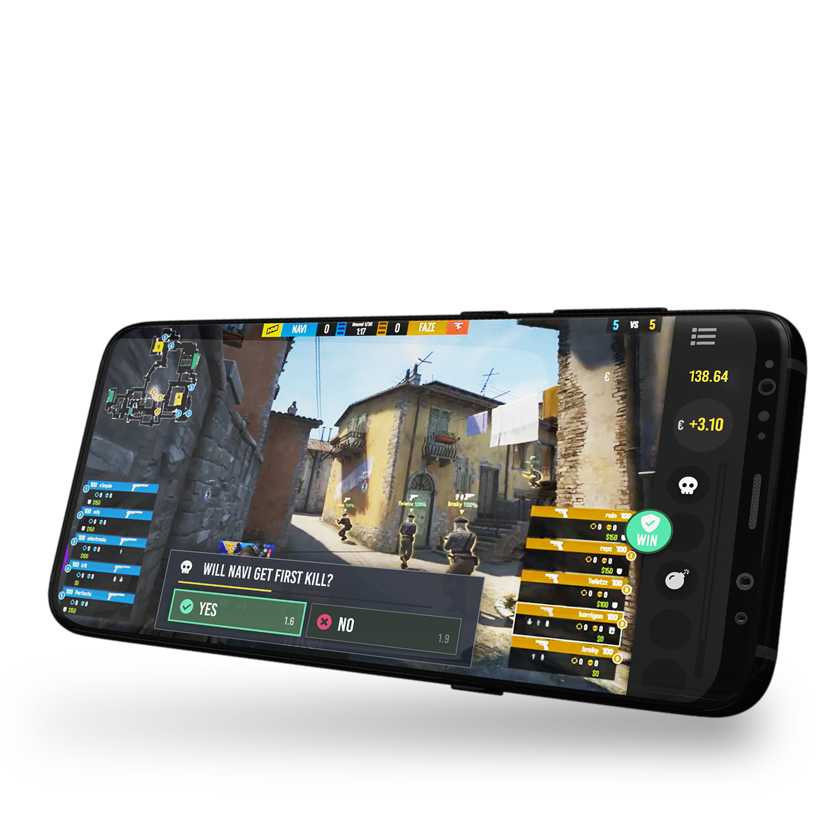
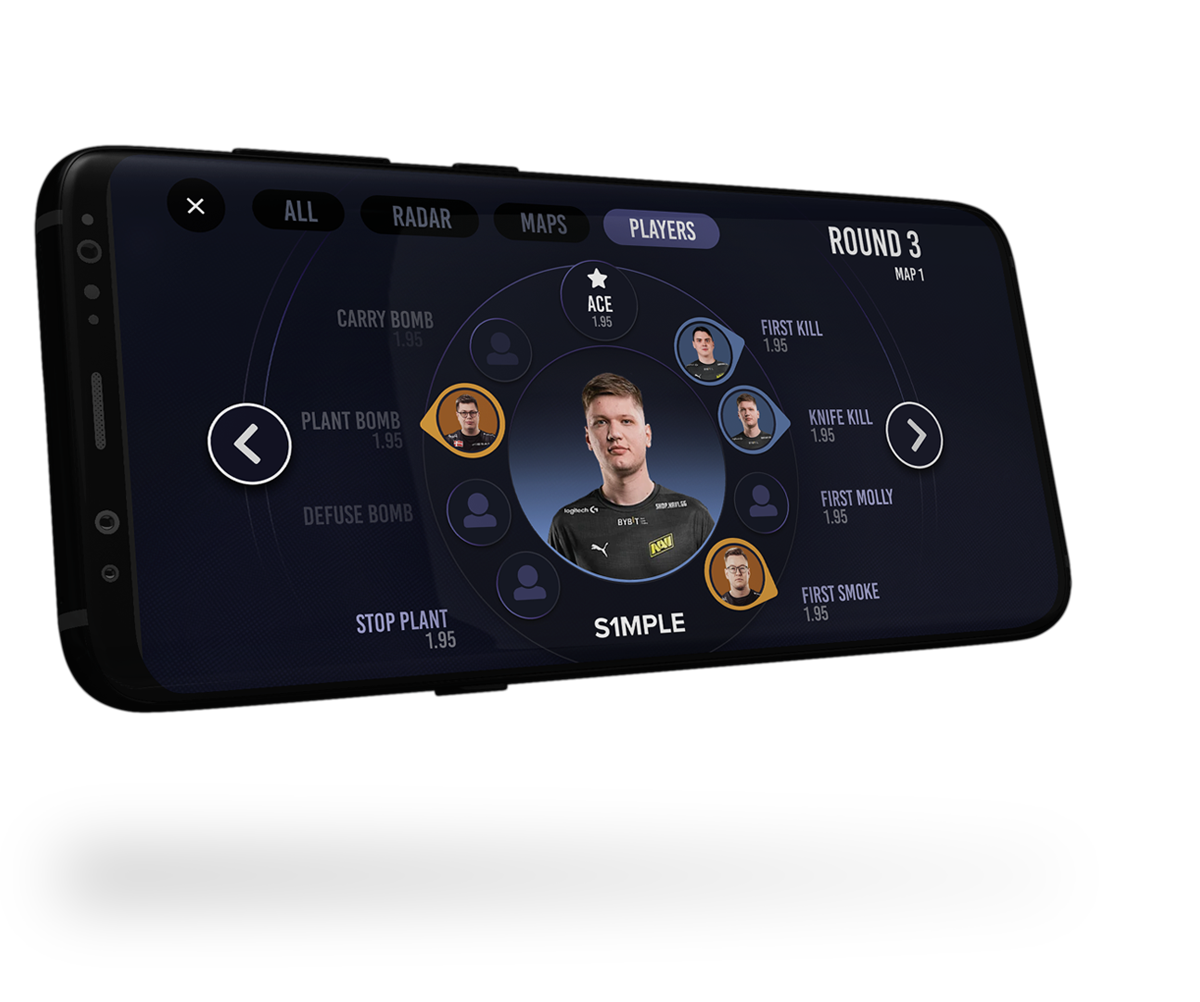
The underlying ML system was capable of producing complex betting markets based on evolving in-game states.
But when left unconstrained, the output resulted in:
• Scenarios with complex, multi-variable outcomes
• Rapidly shifting odds and imbalanced distributions
• Long, dynamically generated market names
• High cognitive load under extreme time pressure
The model operated at system speed.
Player cognition did not.
Without deliberate constraint, the product would overwhelm users, and the interface itself would become unusable under dynamic output conditions.
My responsibility was to define the product architecture that shaped model output into a usable decision system.
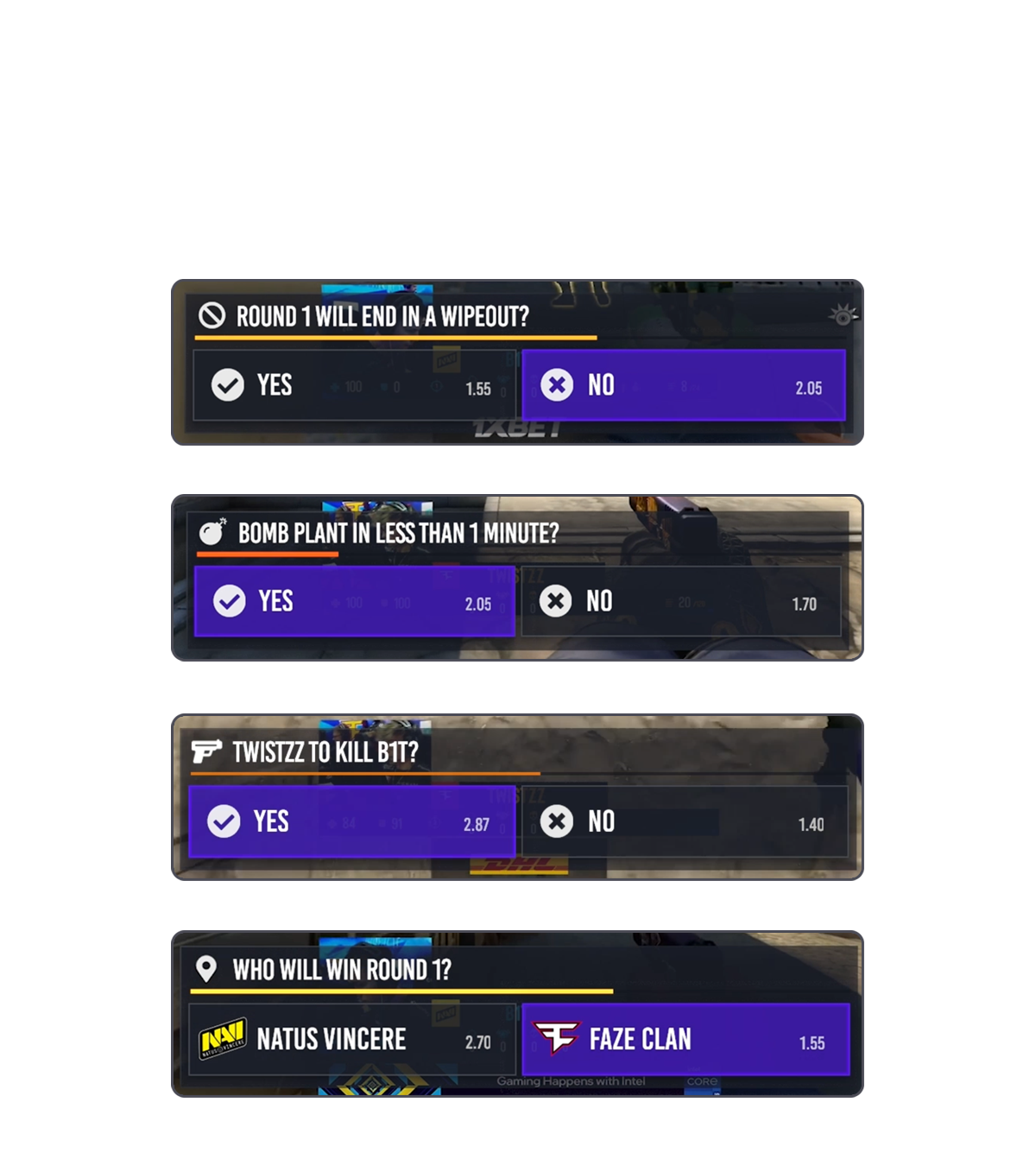
The first step to achieve this was to simplify the decision for users: every market was framed as a question with a binary outcome: Yes / No or Team A / Team B.
In doing this, I established:
• Standardised model output formatting for every market
• Minimised comparing odds under time pressure
• Reduced branching cognitive paths
• UI stability across all user decisions and languages
In addition, Stake Value was pre-configured at session start, which removed the need for users to make complex in-play risk calculations.
The system prioritised markets with close odds, and markets were presented with a visible "burning wick" countdown mechanic to reinforce their ephemeral nature. If a user did not act within the window, the opportunity disappeared.
The result was a continuous stream of simplified, time-bound decisions which aligned machine-generated predictions with user decision making limits.
Beyond individual markets, I defined the broader system architecture:
• Lobby → Rapid In-Play Decisions → Immediate Resolution → Post-Game Summary → Return
• The lobby anchored stake expectations and framed the game context.
• In-play interactions prioritised speed and clarity.
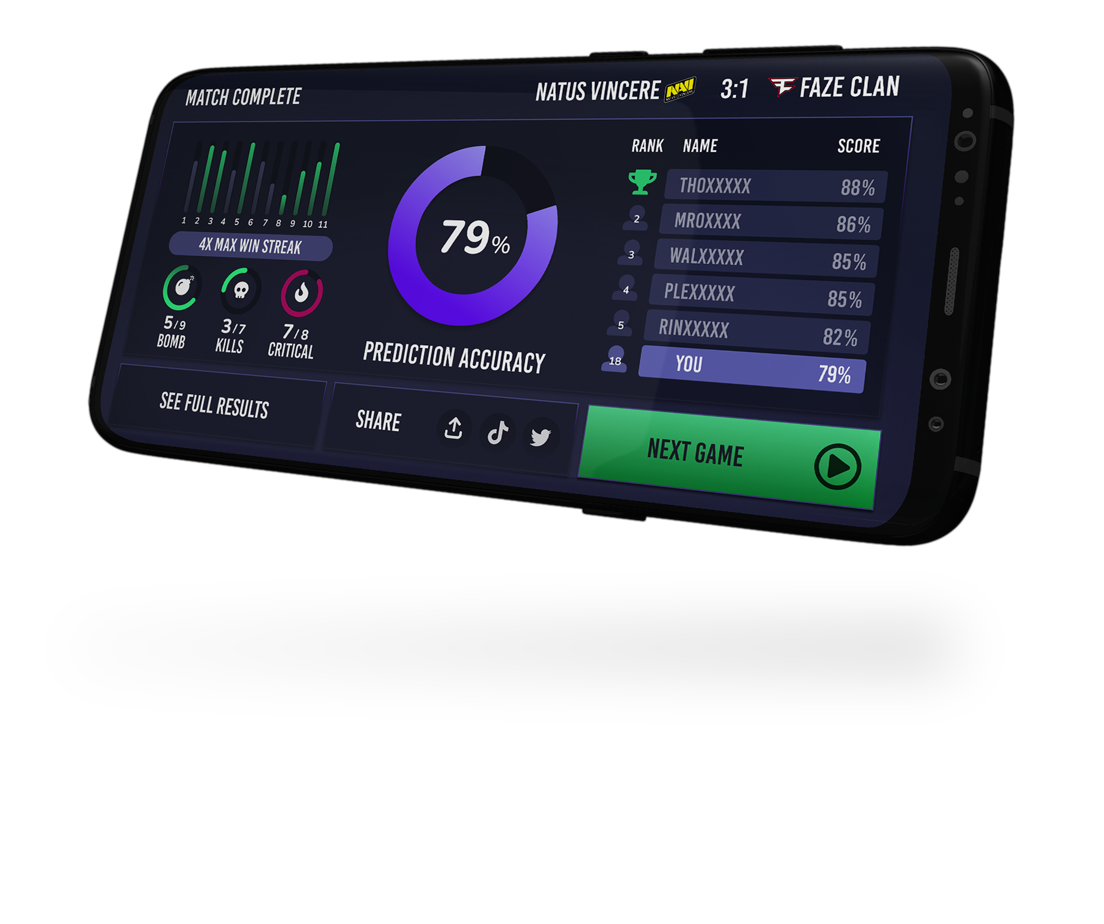
• End game summary screens delivered immediate outcome feedback to maintain pacing and encourage mastery.
• Post-game summaries closed the emotional loop and prepared users for re-entry.
The objective was not feature density, but behavioural coherence and decision velocity.
While ML specialists focused on model development and telemetry ingestion, I owned the end-to-end product vision and UX architecture, ensuring that probabilistic outputs were formatted, constrained, and delivered in ways that were cognitively sustainable and commercially viable.
Although the full product was never launched due to the cessation of the Luckbox brand, a simplified MVP micro-betting feature was implemented on the platform.